From Bayeux to Barnsley: The Story of Cannon Hall’s Tapestry
17th September 2026
The Bayeux Tapestry is making history once again. Nearly 1,000 years after it was created, the famous 7-metre-long embroidery is on public display in the UK for the first time since its creation.
Made in the 11th century, the tapestry tells the story of the events leading up to the Battle of Hastings and the Norman Conquest of England in 1066. Across 58 scenes, it brings one of the most significant moments in English history to life, all through carefully stitched images and intricate detail.
But did you know that Barnsley has a significant tapestry of its own?
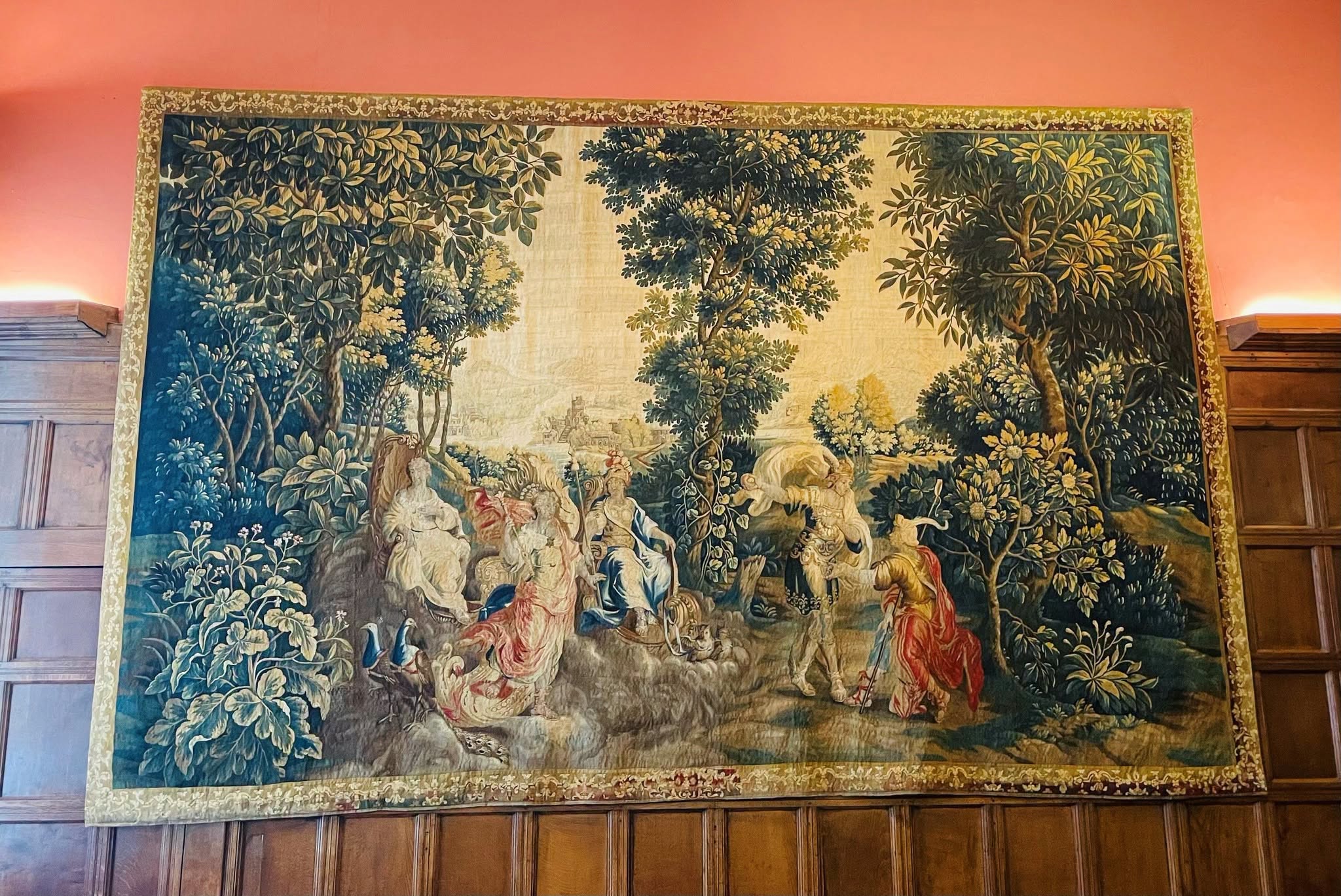
At Cannon Hall Museum, Park & Gardens, you can discover The Judgement of Paris, a remarkable 17th-century tapestry and a particularly important part of the museum’s collection. In fact, it holds the distinction of being the very first item accessioned into the collections.
The Judgement of Paris
Woven in Brussels in the late 17th Century, the tapestry depicts a scene from the ancient Greek myth of The Judgement of Paris. The story tells of Paris, a prince of Troy, who was asked to judge which of three goddesses, Hera, Athena or Aphrodite, was the fairest.
Tapestries like this were hugely popular during this period. As well as being decorative, they helped to provide warmth in large rooms and could transform an interior with elaborate scenes and rich colours.
At Cannon Hall, The Judgement of Paris has been part of countless special occasions over the years, providing a beautiful backdrop for weddings and celebrations.
A treasure addition to the collection
The tapestry came to Cannon Hall as part of a bequest from Ernest Edward Cook, the grandson of renowned travel agent Thomas Cook. Cook entrusted his collection to the Art Fund for distribution, eventually bringing this important piece to Barnsley.
Its significance meant that conserving the tapestry was an important task. A grant from the Association of Independent Museums Pilgrim Trust Conservation Scheme, alongside additional support from Barnsley Museums & Heritage Trust, helped to make this possible.
The conservation process was meticulous. The tapestry was carefully washed before conservators’ repairs splits, holes and other damaged. Its reverse was then lined with suitable fabric to provide additional stability and help protect it for generations to come.
Today, The Judgement of Paris remains an important part of the collection at Cannon Hall Museum, allowing visitors to appreciate not only its intricate craftmanship, but also the centuries of history woven into every thread.
So, while the Bayeux Tapestry may be grabbing the headlines, you don’t have to travel to Bayeux to discover a tapestry with its own fascinating story. There is one right here in Barnsley, waiting to be discovered at Cannon Hall.