Barnsley airman’s sacrifice remembered: Sgt. David Taylor Horsfall of the Dambusters raid
13th May 2026
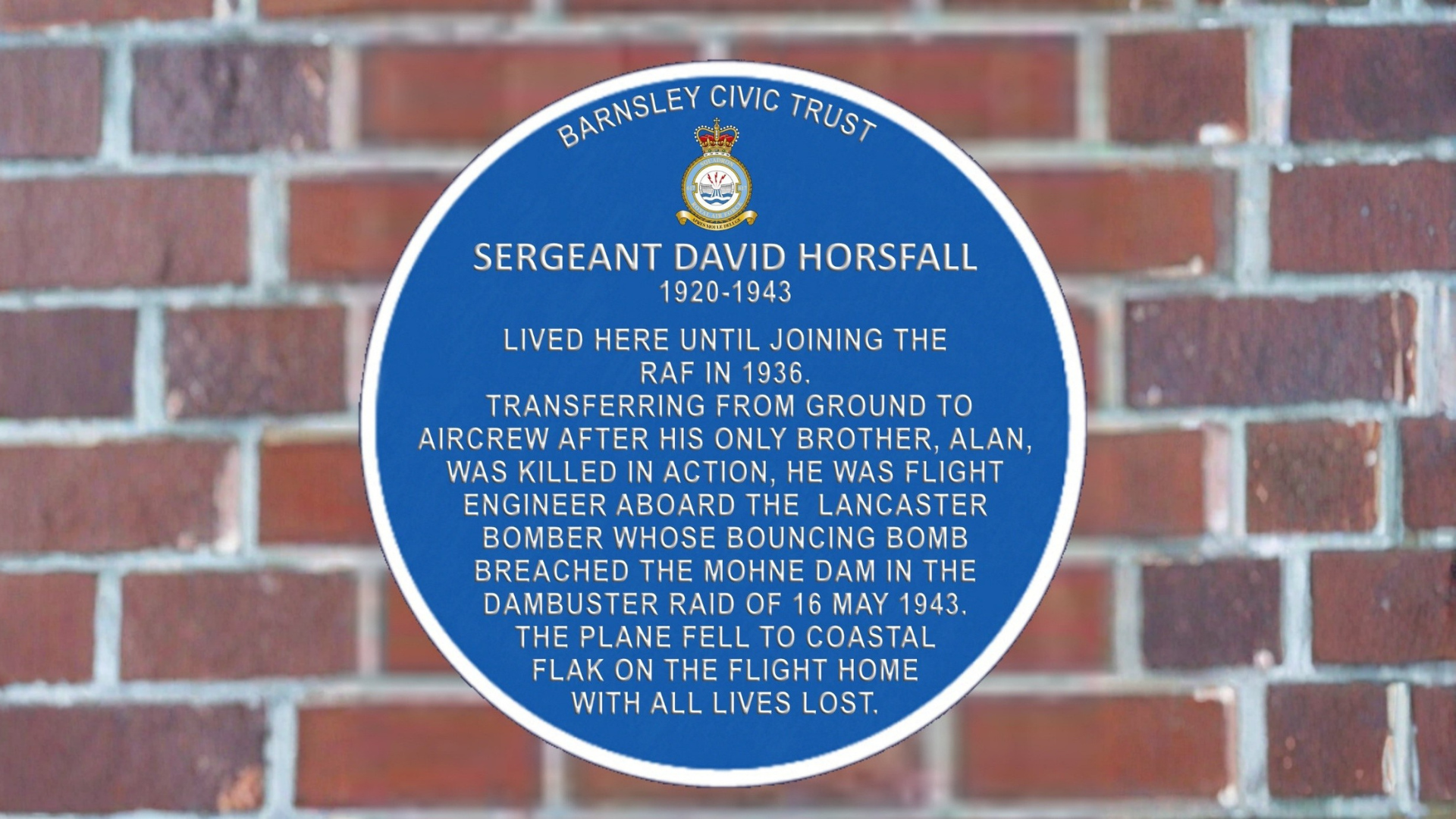
A Barnsley airman who played a vital role in one of the Second World War’s most iconic missions is being remembered for his courage and sacrifice with a Barnsley Civic Trust blue plaque unveiling taking place at Shaw Lane Sports Club, Barnsley on Saturday 16 May 2026 at 11am on what is the 83rd anniversary of this most audacious of all bombing raids, codenamed Operation Chastise.
Andrew Radforth, an official guide at both Lincoln’s International Bomber Command Centre and the Yorkshire Air Museum at Elvington, has agreed to give a short presentation about 617 Squadron’s famous bouncing-bomb raid – and David Horsfalls’ role within it – and dispel some of the myths surrounding the mission. Dan Jarvis, Barnsley North MP and Home Office Minister of State (security), will also speak about the importance of remembrance before the unveiling of the plaque by Barnsley’s Mayor, Coun. David James Leech. The plaque will later be located at Sgt. Horsfall’s former home – 24, Commercial Street, Barnsley.
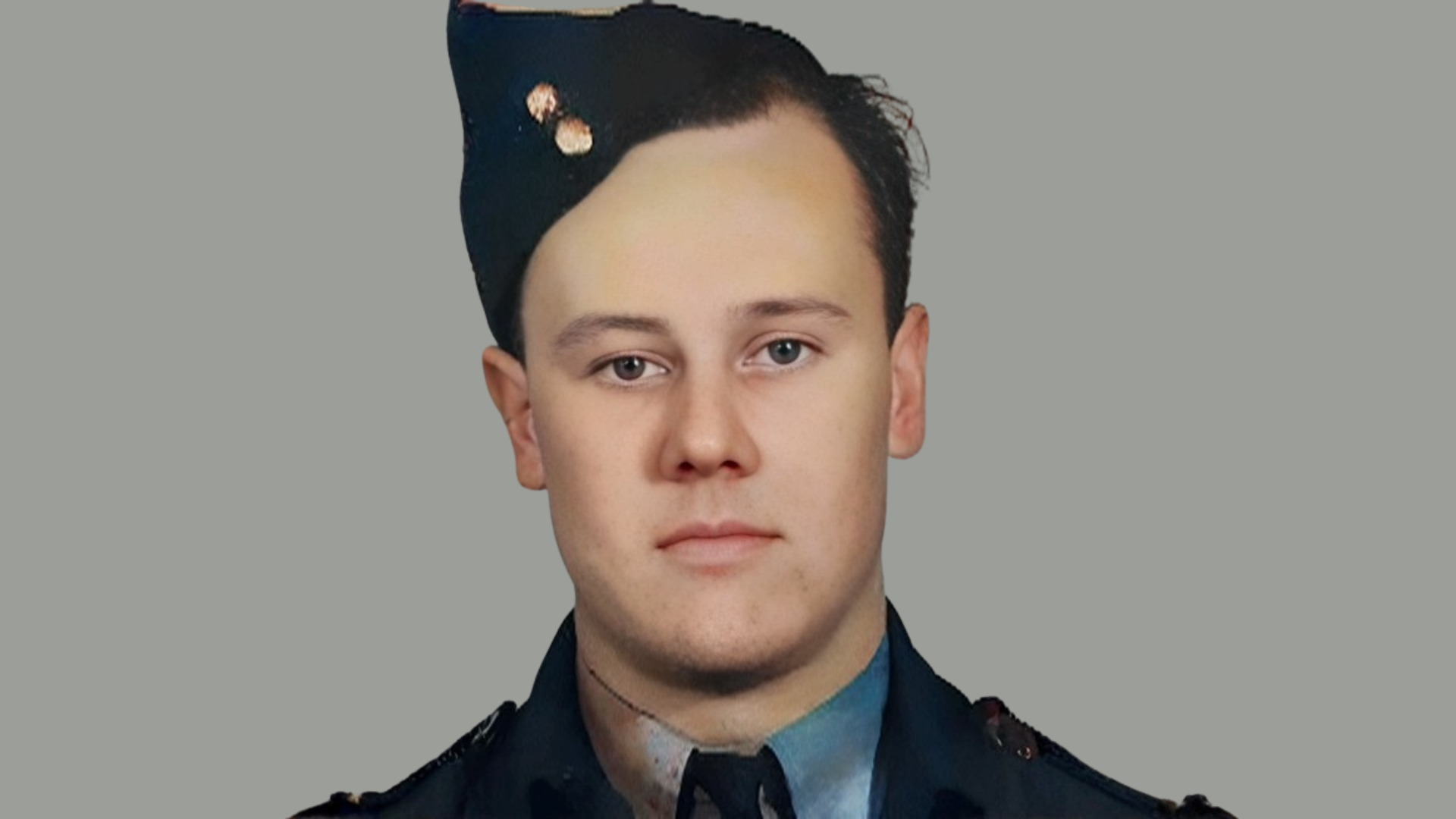
Sergeant David Taylor Horsfall, a flight engineer with the legendary 617 Squadron – the “Dambusters” – was among the 53 men who lost their lives during Operation Chastise on 16–17 May 1943. The daring raid used Barnes Wallis’s revolutionary “bouncing bombs” to strike German dams in the Ruhr Valley, dealing a significant blow to the Nazi war effort.
Born on 16 April 1920 near Leeds, David was the eldest son of Robinson and Emma Horsfall. The family later lived in Barnsley, where he attended Barnsley Grammar School. His life was shaped by war: his younger brother, Alan Albert Horsfall, had already been killed in service before David took part in the Dambusters mission.
On the night of the raid, Sgt. Horsfall flew aboard Avro Lancaster AJ-A (ED877), piloted by Squadron Leader Henry Maudslay Young, known as “Dinghy.” Their aircraft was among those tasked with attacking the Möhne Dam, following earlier attempts by Guy Gibson and others. Making a precise and effective run under intense enemy fire, the crew successfully delivered their bomb, contributing to the eventual breach of the dam.
While the mission achieved its objective, the cost was devastating. As the aircraft returned to Britain in the early hours of 17 May, Horsfall and his crewmates were killed by coastal flak over the Netherlands at approximately 2.58am. Their bodies were later recovered and laid to rest at Bergen General Cemetery, Noord-Holland.
Tragically, loss would define the Horsfall family. Both David and his brother gave their lives in the conflict. Records show the family later moved to Sussex, where their parents remained until their deaths in 1961.
Sgt. Horsfall is also part of a strong local connection to the mission. The same aircraft carried another Barnsley-area man, Sgt. Wilfred Ibbotson of West Bretton, who served as rear gunner and is commemorated on his village war memorial.
Today, Sgt. David Taylor Horsfall is remembered as one of the many young men whose bravery helped shape the outcome of the war. His story stands as a powerful reminder of the human cost behind one of the most celebrated operations in RAF history.