Conserving the History of Cannon Hall Museum
17th September 2026
Curating an exhibition about the history of Cannon Hall is a fantastic way to bring together many different objects. It has been wonderful to be able to display some of the collection for the first time, such as this 17th century document relating to John Spencer and his involvement in the death of a local man. This fascinating document has been conserved so that it can go on display and enable visitors to find out more about the family that owned Cannon Hall.
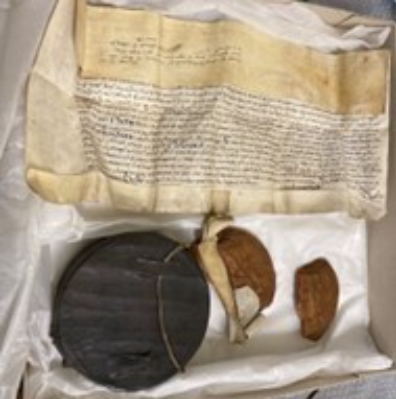
The document before conservation.
The document was donated to Cannon Hall several years ago and is made from vellum (calf skin) with the wax seal of King Charles II. Because the document is written in Latin, Barnsley Museums and Heritage Trust (BMHT) funded specialist research to translate and research it. It was at this stage that it became clear that the document was a royal pardon issued after John Spencer (d. 1681) was found guilty of killing Edward Dison.
The Murder of Edward Dison
John Spencer (d.1681) of Cannon Hall stabbed Edward Dison with a rapier on 11 June 1661. Edward died three days later. The document is written in Latin and was signed by King Charles II on 24 January 1662 following a lengthy legal process.
Edward Dison lived at High Hoyland and, on the day in question, met John Spencer whilst they were both out on horseback. The witnesses at the trial gave slightly differing views of events, but there seemed to have been an argument between the two men. John Spencer stabbed Dison in the back with a rapier creating a wound four inches deep. An inquest was held the day after Dison’s death where it was decided this was an unlawful killing. A trial was later held in York and John Spencer was held in custody.
John Spencer and his ‘sureties’ (six men who provided both money and their word that he would behave well in future) appealed to King Charles II to have the crime pardoned. This was eventually successful and John Spencer had all his lands and goods returned to him.
Research has shown that John Spencer was also involved in two other violent incidents in 1660 and 1667. It is also possible that John Spencer behaved badly towards his stepdaughter, Margaret Hartley. John married Margaret’s mother after his first wife died and rented Cannon Hall from Margaret which had been left to her by her father. Robert Hartley had bought the manor house, farm and land for £2,900 in 1650 but in 1673 Margaret sold Cannon Hall and the surrounding land to John Spencer for only £1,230. Family history implies that John bullied her into both the sale and the low price.
The Conservation
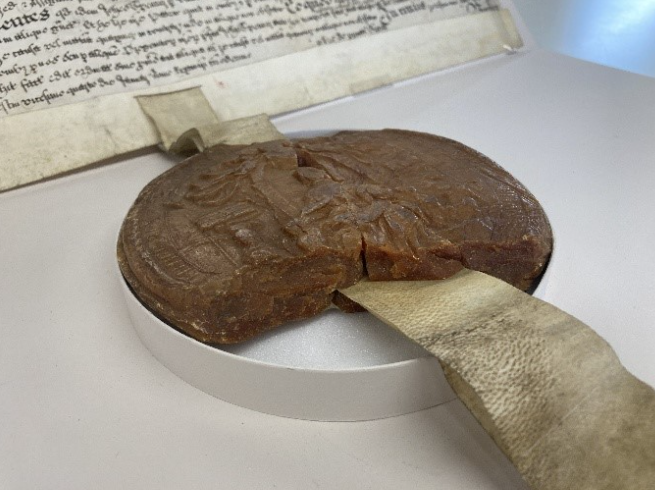
The document had been folded for hundreds of years which added to the difficulty in reading it. The wax seal was also broken into two pieces. To be able to put the document on display for the public it was clear that conservation was needed. An application was made to the National Manuscripts Conservation Trust (NMCT) to fund the conservation treatment, and the work was undertaken by Artworks Conservation in North Yorkshire. BMHT also provided funding for the mounting of the document for the exhibition.
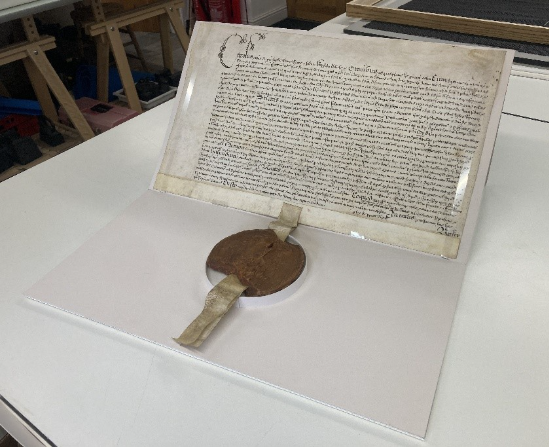
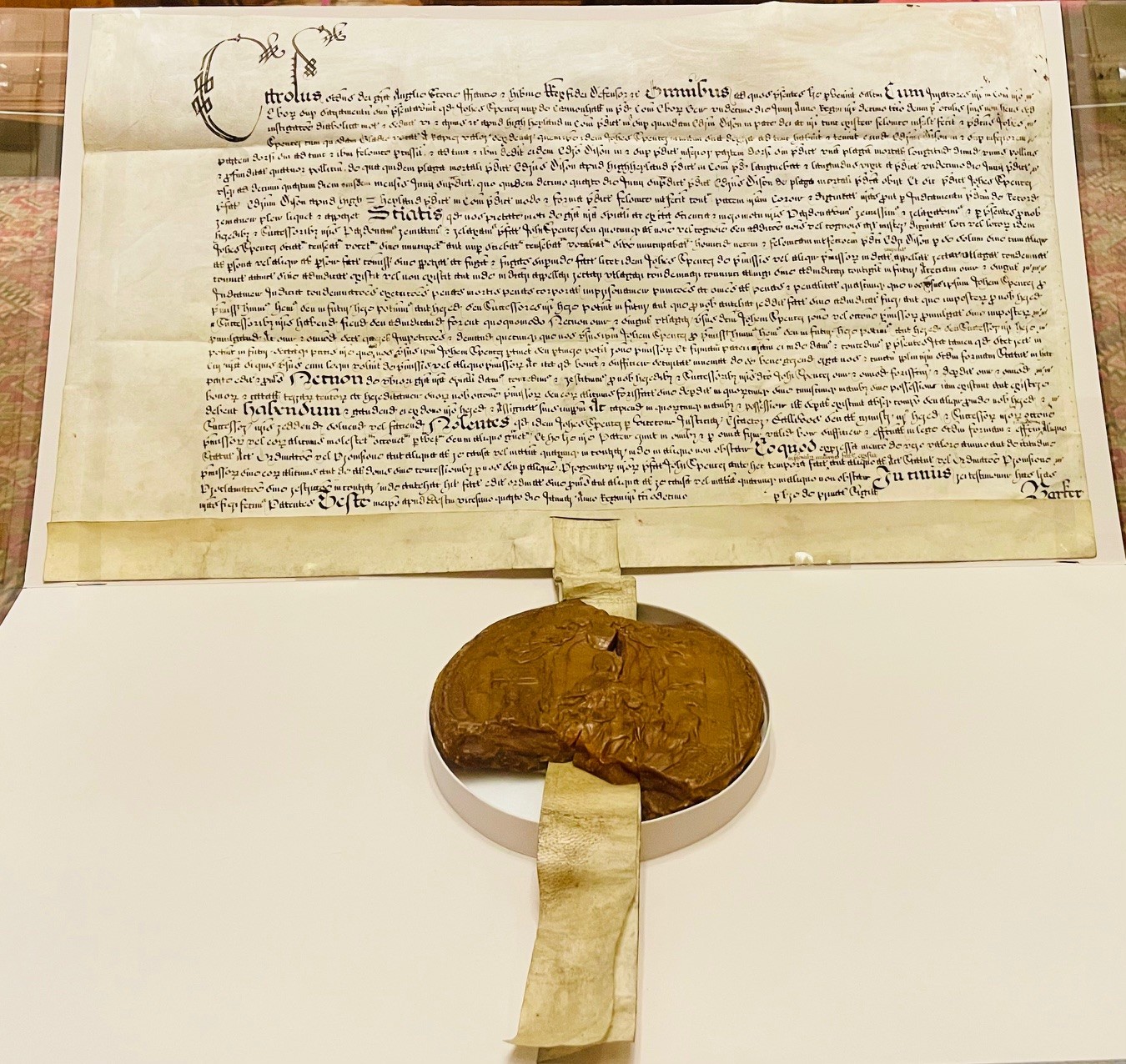
The document after conservation
The vellum was surface cleaned to remove the layers of dirt that had accrued over many years. Gentle humidity was also used to allow the vellum to be safely unfolded and placed flat. The wax seal was mended with beeswax so that it is securely fixed to the document.
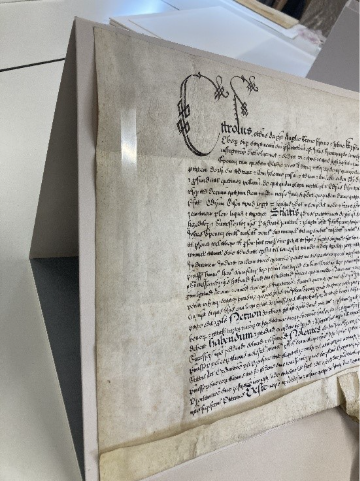
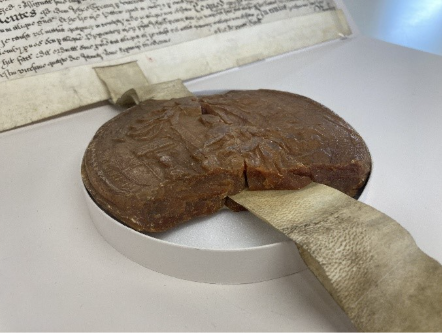
The document has been carefully mounted onto an acid free backing and secured with clear strips. Acid in card or paper degrades over time and can damage any objects in contact with them so acid-free products are always used. The seal is held within a specially made mount to ensure that it doesn’t break again. The document is on display in low light conditions so that it doesn’t fade and once the exhibition has finished on 20th September 2026 it will be ‘rested’ in the storeroom. All of this conservation work means that the document will be preserved for hundreds of years yet to come.
Barnsley Museums would like to thank James Fraser for donating the document and BMHT and NMCT for funding the research, conservation and mounting of the document.